The HVAC company that stopped doing admin at 9pm
A home-services firm loses evenings to quoting, scheduling, and chasing invoices by hand. Here is the job-to-cash loop we build for it and the roughly $61,000 in Year-1 savings it typically recovers, most of it owner time and faster-paid invoices.
No client outcome is claimed. The figure below is a modeled scenario; inspect the assumptions before applying it to your business.
- Modeled Year-1 savings
- $61,000
- Faster payment
- −11 days
- Owner admin saved
- 9 hrs/wk
- Quotes sent same-day
- 92%
Representative build. This describes a system we build and the numbers typical for it, drawn from published benchmarks and our baseline model. Verified, client-signed studies will replace representative ones as permissions land.
The 9pm shift nobody bills for
The owner of a regional HVAC and home-services company did the real work during the day, quoting jobs, running crews, talking to customers. Then he did the other job at night: typing up quotes from photos and notes, plugging jobs into the calendar, building invoices once work was done, and chasing the customers who hadn’t paid.
It can be one to two hours on several evenings, roughly nine hours a week in the modeled scenario. It is also where money leaks. A quote that goes out two days late may lose to a faster competitor. An invoice sent “when I get to it” delays cash. None of it appears as a clean budget line.
What we measured
Trades work doesn’t fit a tidy spreadsheet, so we measured both the obvious cost and the leak:
- Owner labor: ~9 hours/week on quoting, scheduling, and invoice admin, valued at what his time is actually worth to the business (not minimum wage, the man closing the deals).
- Slow cash: average 41 days from job completion to payment, with the delay traced largely to invoices going out late.
- Lost quotes: a measurable share of leads going cold because the quote arrived days after the visit.
For a firm this size the baseline comes to roughly $61,000/year in recoverable cost, weighted toward owner time and the financing cost of slow-paid invoices.
“Savings” isn’t only labor. For a services business, getting paid eleven days faster is real money, it’s working capital you stop borrowing against. We only count it when it’s measurable and both sides can agree it’s attributable, which for slow-paid invoices it usually is.
What we built
A job-to-cash loop that runs on the tools the team already used, their field app, their accounting software, and SMS:
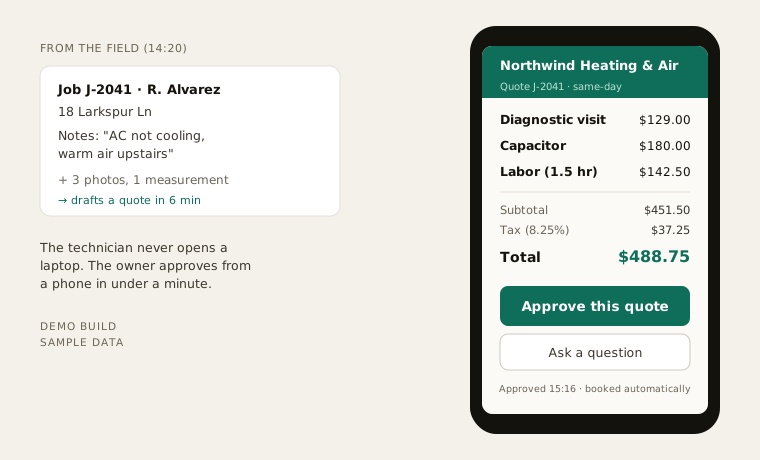
- Quote drafting from the field. The tech submits photos, measurements, and notes; the system drafts a clean, branded quote for the owner to approve from his phone in under a minute. 92% of quotes now go out the same day.
- Scheduling that books itself. Accepted quotes drop straight into the calendar with the right crew, duration, and travel buffer, no re-typing.
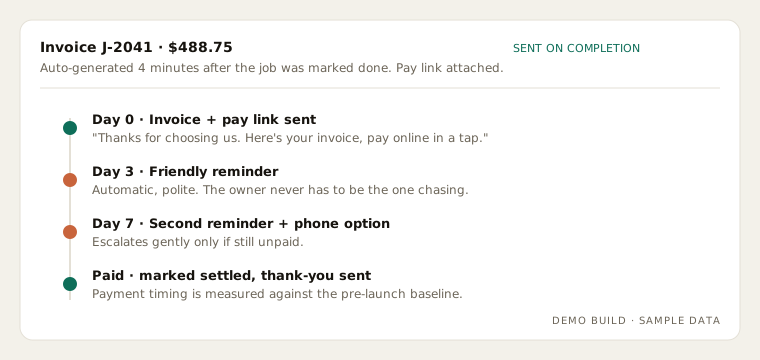
- Invoice on completion. When a job is marked done, the invoice generates and sends automatically, with payment link attached.
- Polite, automatic follow-up. Unpaid invoices get a friendly nudge on a schedule, so the owner never has to be the bad guy at 9pm.
The result
The evening admin shift drops from ~9 hours a week to under an hour of approvals. Average time-to-payment falls by around 11 days. And quotes going out same-day mean fewer leads lost to whoever replied first.
One honest complication: the invoice-on-completion step is the fiddly part. Older accounting packages often don’t expose a clean way to attach a payment link, and a couple of the common field apps mark a job “done” in a status the accounting side can’t see. On builds like this we usually budget an extra few days to handle that handoff cleanly rather than paper over it, because an invoice that generates but never sends is worse than the manual process it replaced.
The $61,000 figure is a modeled scenario, not a client result. A real audit would separate annual labor savings from the one-time working-capital release created by faster invoicing, count financing cost rather than the released cash as recurring savings, and correct the fee if verified savings are lower.
See it run
We built the job-to-cash loop and ran it on sample jobs. Field notes and photos become a branded quote in minutes; the customer approves from a phone; the invoice and reminder sequence then run themselves.
Why this generalizes
Plumbers, electricians, landscapers, cleaners, roofers: the job-to-cash loop is nearly identical across the trades: quote, schedule, do the work, invoice, get paid, follow up. Once we’ve built it well once, the pattern adapts fast to the next firm’s tools. That’s how a savings-priced shop can afford to keep taking the risk: every build makes the next one cheaper and the estimate sharper.
If you’re doing admin after the kids are in bed, book a free Savings Audit. We’ll put a number on those evenings, and you keep it whether or not we build anything.